war dead


Queen's WWI - MacTavish, Roswell Murray

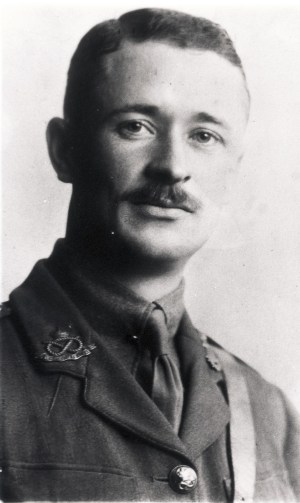
Roswell Murray MacTavish – image courtesy of Queen’s University Archives

Roswell ‘Ross’ Murray MacTavish was born on September 22, 1888 in St. George, Ontario, the son of William MacTavish and Margaret (née McKay). His father was the Presbyterian minister of Deseronto between 1895 and 1905 and Ross attended both the Deseronto Public School and Deseronto High School.

He studied at Queen’s University, getting his Bachelor of Arts degree in 1907 and a Bachelor of Divinity degree in 1913. He had obtained a travelling scholarship and was in England at the outbreak of World War I. On this date in 1914 he enlisted as a trooper in the 2nd King Edward’s Horse regiment. He obtained a commission as a second lieutenant in the 2nd Battalion of the South Staffordshire Regiment on March 13th, 1915.

MacTavish was the first person with a Deseronto connection to join the armed forces in the First World War. He rose to the rank of Captain and was awarded the Military Cross on January 1, 1919.

MacTavish continued to serve in France after the war, working at the headquarters of the 6th Infantry Brigade. He died of influenza in the No. 3 Canadian Stationary Hospital at Arques on February 6, 1919 and was buried in the Longuenesse Souvenir Cemetery, Saint-Omer.

Ross MacTavish’s younger brother, Wilfrid, named his son (born in Saskatchewan in 1919) Roswell Murray. Roswell Murray MacTavish junior joined the Royal Canadian Air Force during the Second World War as a flying officer and was killed when his Hurricane aircraft crashed in Scotland on March 18th, 1944. He was buried in Ayr cemetery.

Armies of Europe at a glance

Armies of Europe at a glance from the The Sun, New York, August 2nd, 1914: Russia, Germany, Austria, France, Italy, England, Serbia

Today marks the 100th anniversary of the declaration of war by Great Britain on Germany in response to the German invasion of Belgium on that day. At 11pm Greenwich Mean Time that evening (6pm Eastern Standard Time), Britain and its Dominions (including Canada, Australia, New Zealand, India and South Africa) were officially at war. You can hear about people’s memories of their reactions to the declaration in this podcast from the Imperial War Museum.

During the next four years we will be marking the 100th anniversaries of local events in relation to the war on this blog. We plan to commemorate the enlistment and conscription of individual Deseronto and Tyendinaga Mohawk Territory men, women, and boys, their deaths in action and from disease, as well as events associated with the local Royal Flying Corps/Royal Air Force pilot training establishments at Camps Rathbun and Mohawk, which operated between 1917 and 1918.

Our aim is to use archival materials from Deseronto and from around the world to demonstrate the local effects of a global war.

If you have photographs, or letters, or family stories about the First World War in Deseronto and the surrounding area, we’d love to share them here as part of this project: you can email us at deseronto.archives@gmail.com.

August 4th 2014 will mark the 100th anniversary of Canada’s entry into the First World War. Organizations and communities around the world are marking this occasion by examining the effect the war had on their local area. We’ll be doing this in Deseronto, too.

In the Archives we started by researching the 34 names of the First World War casualties named on the town’s war memorial. In the process we found out some interesting facts about the monument itself.


War memorial in Deseronto, April 2014

The memorial, which stands on the South side of Main Street, opposite Rathbun Park, was unveiled in a ceremony on Labour Day (September 3rd) 1923. The event was attended by many of the townspeople, as the photograph below (one of several taken on the day) shows. A piece of land forty feet square was purchased by the Town of Deseronto from the Rathbun Company for the monument’s site, at a cost of $100.

Unveiling ceremony for the Deseronto war memorial

The memorial itself was donated to the town by a former Deseronto resident named Thomas Carson Brown. Thomas was born on 21 April 1870, the son of Thomas Brown and Emily Varty and one of 10 children. His mother died in childbirth in Lennox and Addington County (where the family had a farm) when Thomas was seven years old and by 1881 the family had moved to Mill Point (Deseronto). In the 1891 census, when he was 21, Thomas’s trade is given as bricklayer. His father died just six weeks after the census was taken.

It was through the bricklaying trade that Thomas C. Brown would go on to earn his fortune in New York State, where his firm constructed a number of public buildings, including the Plattsburgh Normal School, pictured here, and a large section of the Clinton Correctional Facility at Dannemora. Deseronto’s newspaper, The Tribune, reported Brown’s marriage in August 1899 to Hattie B. Humphrey, noting that “the groom is well and favourably known in Deseronto, where he passed his boyhood days. He is now engaged in the contracting business in Little Falls. He is a brother of Mrs. Jas. Sexsmith.” Thomas’s sister, Jane Brown, married James Sexsmith in Deseronto in January 1884. She died of pneumonia in 1910.

Plattsburgh Normal School

Brown went on to serve as a Senator in the New York Senate between 1925 and 1930, where he took a keen interest in prison reform issues. He clearly never forgot his home town of Deseronto, as the generous gift of a war memorial demonstrates. It is not just a war memorial, however, as Thomas C. Brown ensured that his parents and five of his sisters (Jane, Ida, Etta, Emma and Annie) were also commemorated on the structure, as you can see in this detail.

Detail of war memorial

Thomas himself died on May 24th, 1952 at his home at 1174 Lowell Road, Schenectady, New York: you can read his obituary in the Schenectady Gazette (PDF made available through the Fulton History site).

Over the next four years we will be marking the 100th anniversaries of local people’s involvement in the First World War here on the blog. There are a lot of stories to be told and we are always keen to hear new ones, so if you have any local World War One information which you would like to share with the world, please let us know!
« Previous Page