World War I


George Brant signature

George Brant signed up in Deseronto on this day in 1916. He stated that he was born in Deseronto in 1897, the son of Lizzie Brant.

George joined the 155th Battalion with the regimental number 636211. He was five feet four inches tall, with a dark complexion, blue eyes and black hair. His service record shows that he served for six months and then went absent without leave in May, being struck off as a deserter on June 8th. He was handed over to the civil authorities and imprisoned for nine months. On December 8th, 1916 he signed up again, this time in Kingston, joining the 207th Battalion with a new number: 246784. Three days after enlisting, he signed a form confessing that he had deserted.

George Brant desertion confession

Form of Confession of Desertion

I, George Brant, do hereby confess that I am No.___________ of the 155th Battalion, C.E.F.?  and that I deserted from that Corps on about May 1916.

Signed this 11th day of December 1916.

Brant arrived in England on September 15th, 1917 and joined the Princess Patricia’s Canadian Light Infantry in France on December 7th, 1917.

George Brant was wounded in the left leg at the Battle of the Canal du Nord and was sent to England to recover. He rejoined his unit in France on October 22nd. He was demobilized in Kingston on March 19th, 1919.


Please comment if you can tell us more about what happened to George after the war.
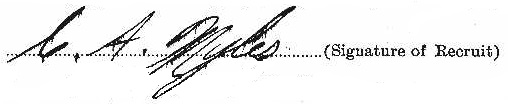
Clifford Allan Myles signature

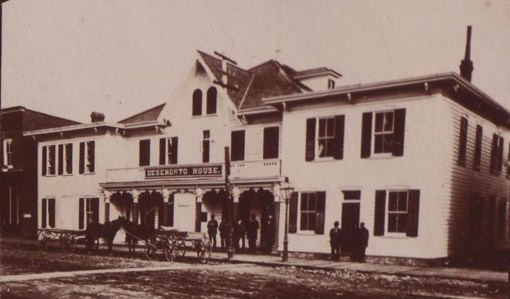
On this day in 1916, Clifford Allan Myles signed up in Toronto. He was born in South Woodslee, Ontario, on May 23rd, 1895, the son of William Myles and Emma (née Brown). The family had moved to Deseronto by 1916, when William was the proprietor of the Deseronto House Hotel on Main Street (where Deseronto Public Library is today).

Deseronto House Hotel

Myles joined the 92nd Battalion with the regimental number 193455. He had previously served as a corporal in the 46th Regiment. He was described as five feet eight and a half inches tall, with a dark complexion, grey eyes and black hair. His service record shows that he travelled to England on the SS Empress of Britain, arriving on May 29th, 1916. He was transferred to the 42nd Battalion and arrived in France on October 3rd, 1916.

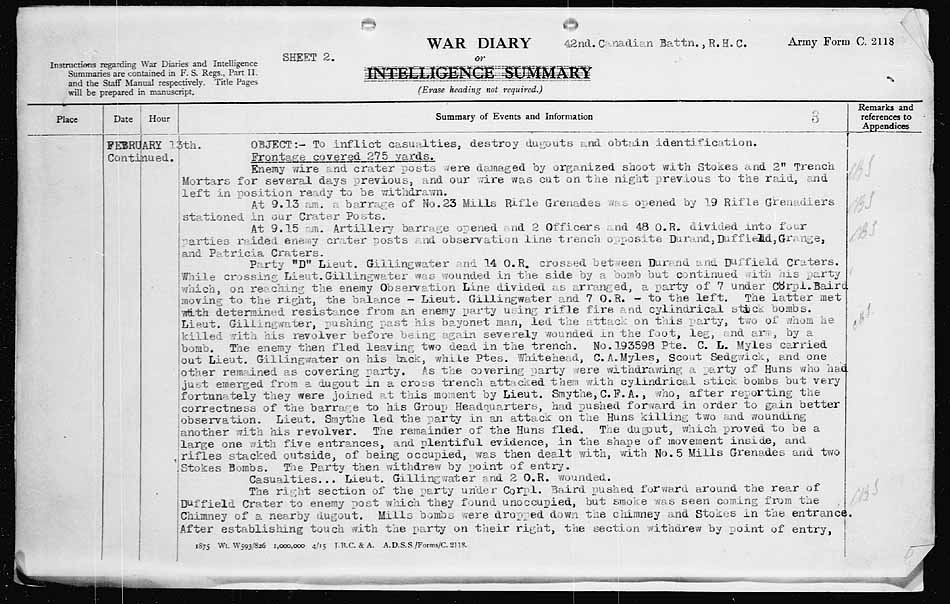
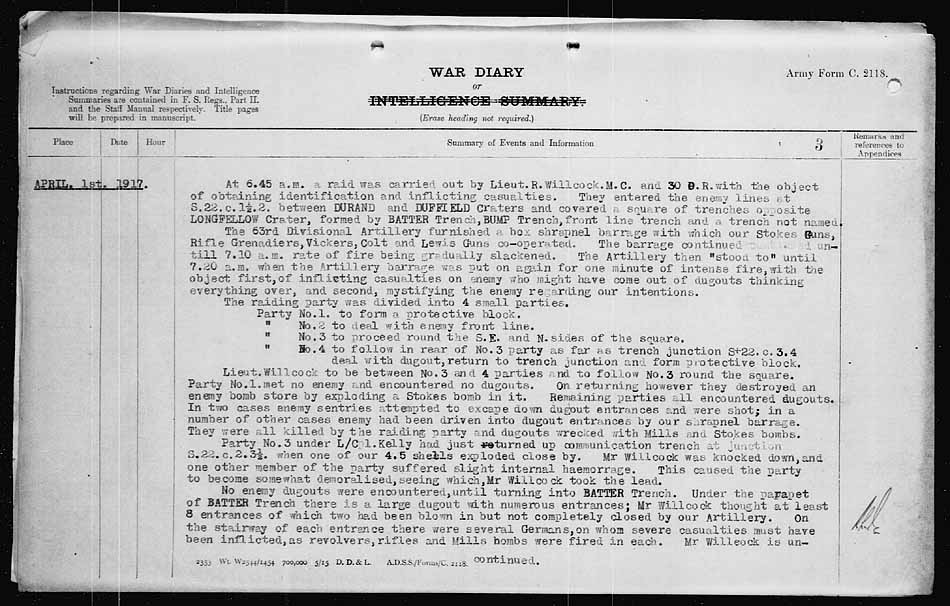
Myles was awarded the Military Medal on March 26th, 1917 and a Bar to this medal on May 26th of the same year, when he was serving as a lance corporal in the 42nd Battalion near Vimy. The citation for the Bar explains the context of this award:

Honours and Awards Citation Cards, Library and Archives Canada (image courtesy of Ancestry.ca)

Honours and Awards Citation Cards, Library and Archives Canada (image courtesy of Ancestry.ca)

BAR TO MILITARY MEDAL

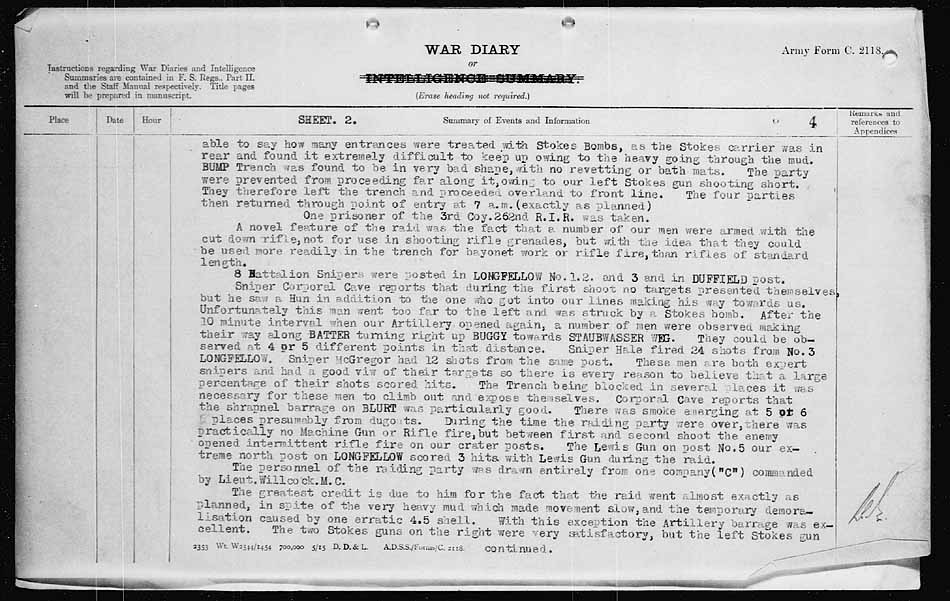
On 1st. April 1917 N.B.Neuville St. Vaast during a successful daylight raid this N.C.O. led his party with marked coolness and skill 100 yards along enemy’s front line bombing enemy dugouts with Stoke’s and No.5. Mills and establishing and maintaining a block to cover withdrawal of another party from enemy’s second line. He was granted a Military Medal for outstanding bravery displayed in a previous and equally successful raid on February 13th. 1917, A.F.W. 3121 1-4-17

The unit’s official war diary describes the February 13th (page 1, page 2, page 3) and April 1st (page 1, page 2, page 3) raids in some detail and mention Myles by name.

During 1917 Myles was treated in England for shell shock and he stayed in England for the rest of the war. He was promoted to corporal in June 1918. Myles left Scotland on the SS Saturnia in May 1919 and was demobilized in Kingston on May 22nd.

Clifford married Bertha May Connors on November 1st, 1922 in Colborne, Ontario, when he was working as an electrician. He died on February 4th, 1969.

Gerald Clifton King signature
On this day in 1916, Gerald Clifton King signed up in Ottawa. He was born on September 15th, 1899 in Deseronto, the son of John King and Lily (née Morrison).

King’s regimental number was 541593. He was five feet seven inches tall, with a dark complexion, brown eyes and black hair.

King’s service record shows that he arrived in England on March 25th, 1916. He was sent to France in November. In May 1917, his true age was discovered (there is a copy of his birth certificate in the file) and he was sent back to England as he was only 17 and too young to be serving overseas. He served in England until March 1918, when he was sent home to Canada. He was discharged as medically unfit in Kingston on July 18th 1918, due to a hernia caused by falling off a horse and a heart condition.

Gerald married Vera Milburn Riddell on October 8th, 1928 in Ottawa, when he was working as a civil servant. A note on his service file records that he died on February 3rd, 1970.

Harold McAfee signature

On this day in 1916, Harold McAfee joined up in Deseronto. He was born in Napanee on May 2nd, 1890, the son of John McAfee and Hester March.

Harold joined the 155th Battalion with the regimental number 636210. When he signed up he was described as five feet three and three quarter inches tall, with a dark complexion, blue eyes and black hair. His service record shows that he left Canada on the SS Northland on October 17th, 1916.

He was transferred to the 21st Battalion and joined that unit in France on December 8th. In January he was admitted to hospital and on February 16th he was invalided to England, suffering from dysuria. He did not come home.

William Keeley signature

On this day in 1916 William Keeley, a teamster, signed up in Deseronto. He appears to have been born in Lingwood, Norfolk, England in 1897, the son of John Joseph Keeley and Alice (née Patterson). His father died in 1905 and William came to Canada. There is a record at Library and Archives Canada of a Barnado Homes child called William Keeley who arrived in Quebec on the SS Dominion in September 1907, which could be him.  At the time of the 1911 census he was 14 years old and was working on the farm of William and Annie Joyce in Richmond Township, Lennox and Addington County.

When he enlisted, he gave William Joyce as his next of kin and Joyce signed his attestation paper. Keeley was five feet five and a half inches tall, with blue eyes, brown hair and a fair complexion. He was working as a teamster in Deseronto and he joined the 155th Overseas Battalion with the regimental number 636182.

Keeley’s service record shows that he arrived in England on October 23rd, 1916 on the SS Northland (and that his mother was still alive and living at 10 Saloon Street, Great Yarmouth). He joined the Machine Gun Corps in France in May 1917 and was wounded by a gas shell on September 15th, 1918. He spent three weeks in hospital. In February 1919 he was back in hospital for a month with influenza. He returned to Canada in July 1919 and married Myrtle Jaynes of Napanee on March 22, 1921.

The Lennox and Addington Historical Society has the following to say about his life after the war:

Little is known of his service, but William Keeley was one of those for whom the war was a deeply disturbing experience. After discharge, he married and commenced farming on the Hamburg road, but found it difficult to settle down. Nothing seemed to go right for him. In July, 1939, he was part of a noisy disturbance at the Paisley Hotel in Napanee. He was taken across to the Town Hall, and placed in one of the cells for the night. In the morning, it was found that he had committed suicide.1


Keeley was buried in the Riverside Cemetery in Napanee. Myrtle died in 1973 and was buried there with him.

1 Taken from this Lennox and Addington Historical society page

Wilbert Smith signature

On this day in 1916, Wilbert Smith signed up in Deseronto. He was born in the town on February 10th, 1897, the son of Alfred Smith and Addie (née Patton).

Wilbert joined the 155th Battalion with the regimental number 636186. He was five feet five and three quarter inches tall, with a fair complexion, blue eyes and brown hair. His service record shows that he sailed from Halifax on the SS Northland on October 17th, 1916 and joined the 21st Battalion in France on December 8th, 1916. On April 10th, 1917 he was injured in the right side of his face and neck by a piece of shrapnel. He spent the next seven months in hospital in England and then served with reserve battalions in England until the end of the war. He was suffering from ‘nervous debility’ in July 1918 and classified as B2 in terms of fitness.

Smith left England on the SS Aquitania at the end of November 1918. He was discharged as physically unfit for further service on January 20th, 1919 in Toronto. He married Marie Aletha Baker on November 24th, 1919 in Napanee and he died in Whitby, Ontario on January 21st, 1956.

Harry Sharpe signature

On this day in 1916, Harry Sharpe joined the army in Deseronto. He was born in Deseronto on March 19th, 1889, the son of Philip Sharpe and Sarah (née Smith). He married Flossie Milligan on March 10th, 1911 in Napanee and was working as a baker, when he enlisted. His younger brother Alfred Nelson Sharpe had signed up on the previous day.

Like his brother, Harry joined the 155th Battalion. His regimental number was 636183. Harry was described as having a dark complexion, with black eyes and black hair. His service record shows that he arrived in England on October 28th, 1916 on the SS Northland. He joined the 4th Canadian Mounted Rifles in France on December 29th, 1916 and a week later was admitted to hospital suffering from deafness. He was discharged back to duty on January 17th, 1917. In February he was in hospital again, with a hernia, and was sent to England in March for an operation to repair it. He was discharged in June and transferred to the 8th Reserve Battalion.

The hernia recurred in 1918 and Sharpe returned to Canada on the SS Carmania on December 30th, 1918. He was discharged in Toronto on January 29th, 1919 as being medically unfit for further service. In 1921, he was living with Flossie and their three children in Fourth Street, Deseronto. He left Canada for Detroit on April 30th, 1924. Harry’s great-neice, Sharon Sharpe, tells us that he was murdered in America during the 1920s.

Lyle Davis signature

On this day in 1916, Lyle Egbert Davis signed up in Deseronto. He was born February 18th, 1898, the son of John Leslie Davis and Theresa (née Howard).

Davis joined the 155th Battalion with the regimental number 636185. He had a fair complexion, blue eyes and brown hair and was five feet five inches tall.

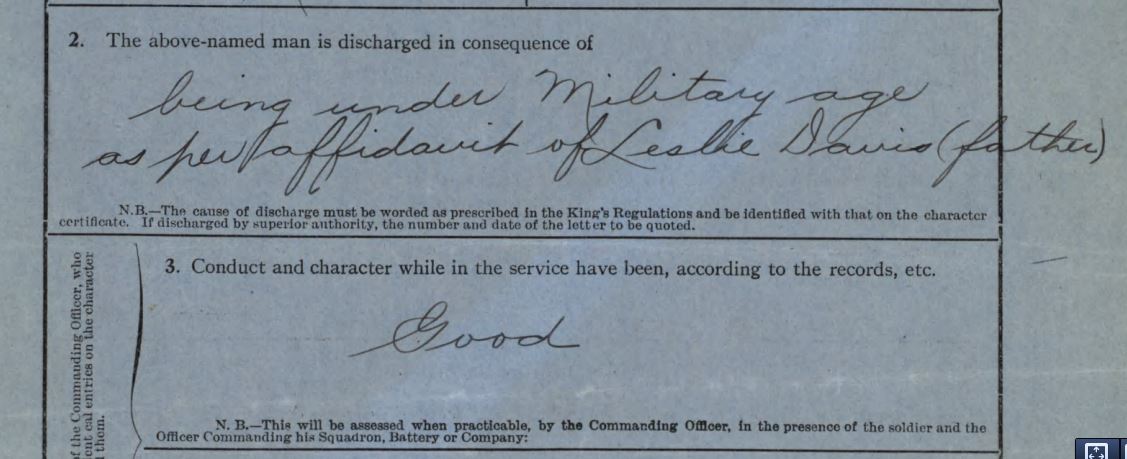
Lyle’s service record shows that he was in the army for only 38 days before being discharged due to being under age. He was 17 when he signed up and the minimum age for serving overseas was 19.

Lyle Davis discharge

2. The above-named man is discharged in consequence of
being under Military age as per affidavit of Leslie Davis (father)
3. Conduct and character while in the service have been, according to the records, etc.
Good

Lyle died in 1967 and was buried in the Deseronto cemetery.

Alfred Nelson Sharpe signature

On this day in 1915, Alfred Nelson Sharpe signed up in Deseronto (he was the first person to sign up in the town itself). He was born in Deseronto on April 25th, 1897, the son of Philip Sharpe and Sarah (née Smith). Alfred married Emmeline Mary Greatrix in Belleville on March 6th, 1915.

Sharpe joined the 155th Battalion with the regimental number 636181. He was five feet six inches tall, with a fair complexion, blue eyes and brown hair. His service record shows that he was initially discharged in Kingston as medically unfit on October 5th, 1916: he was suffering from a painful varicocele, but refused to undergo an operation. He enlisted again in Toronto on January 30th, 1917 but was again discharged as medically unfit in August, this time because he had chronic appendicitis and again, refused to be operated upon.

Alfred left Canada for the United States in 1922. He died in Los Angeles on December 17, 1971.

Norman Albert Miller signature

On this day in 1915, Norman Albert Miller signed up in Belleville. He was born on June 27th, 1894 in Tyendinaga, the son of Alexander Miller and Lydia (née Maracle), who were Mohawks.

Miller joined the 80th Battalion with the regimental number 220322. He was described as five feet five inches tall, with a dark complexion, brown eyes and dark brown hair. His service record shows that he was later transferred to the 74th, 51st and 38th Battalions. He arrived in France with the 38th Battalion on August 13th, 1916.

On June 28th, 1917 Miller received severe gunshot wounds to the shoulder and hand. He was sent to England to recover and rejoined the 38th Battalion in November 1917. He was transferred to the 4th Battalion Canadian Machine Gun Corps in May 1918 and appointed Lance Corporal in September of that year.

Norman arrived back in Halifax on the RMS Olympic in June 1919 and was demobilized on June 16th, 1919 in Kingston. He married Mary Lillian Gowdy on April 23rd, 1920 in Tweed. He died in Brantford on May 20th, 1977.

« Previous PageNext Page »