World War I


Leo Clarence Dubey signature

Leo Clarence Dubey, a bartender, signed up in Montreal on this day in 1917. He was born in Deseronto on February 9th, 1894, the son of Honoré Dubé and Helzilda (née Desjardine). Leo was working as a telephone operator in Deseronto at the time of the 1911 census.

He joined the Royal Canadian Horse Artillery with the regimental number 349761. He was five feet six inches tall, with a dark complexion, grey eyes and dark brown hair. His service record shows that he arrived in England on December 7th, 1917 on the SS Megantic and joined his unit in France on February 27th, 1918. On July 17th he was admitted to hospital after being injured in an accident while on duty, receiving bruising to his chest and abdomen. He was discharged two weeks later.

On November 2nd, Leo was admitted to hospital again, suffering from a fever. He remained there until November 18th, but somehow found time to be charged with drunkenness and “being in Paris Plage without a pass” on November 14th. For this he was sentenced to forfeit two weeks’ pay. Perhaps he had been celebrating the end of the war that day; on December 24th he was back in hospital suffering from an infectious disease.

Dubey was transferred to England on January 26th, 1919 and arrived back in Canada on the SS Minnekahda in March. He was demobilized in Kingston on March 29th, 1919. In 1921 he was living in Montreal with his younger brother William, working as a clerk.

Elmer Eugene Pringle signature

On this day in 1917 Elmer Eugene Pringle, a munition worker, signed up in Toronto. He was born in Deseronto on October 17th, 1889, the son of Ezra Pringle and Annie Elizabeth (née Watson). On his attestation paper Pringle gave his date of birth as October 19th, 1890. The family had moved away from Deseronto by 1901, when they were living in Tay Township. Elmer’s father, Ezra, died in Fesserton in 1907, while Annie died in Toronto in 1913. Elmer’s brother Ernest had enlisted in 1916. Like Ernest, Elmer gave their sister, Edith Evans, as his next of kin.

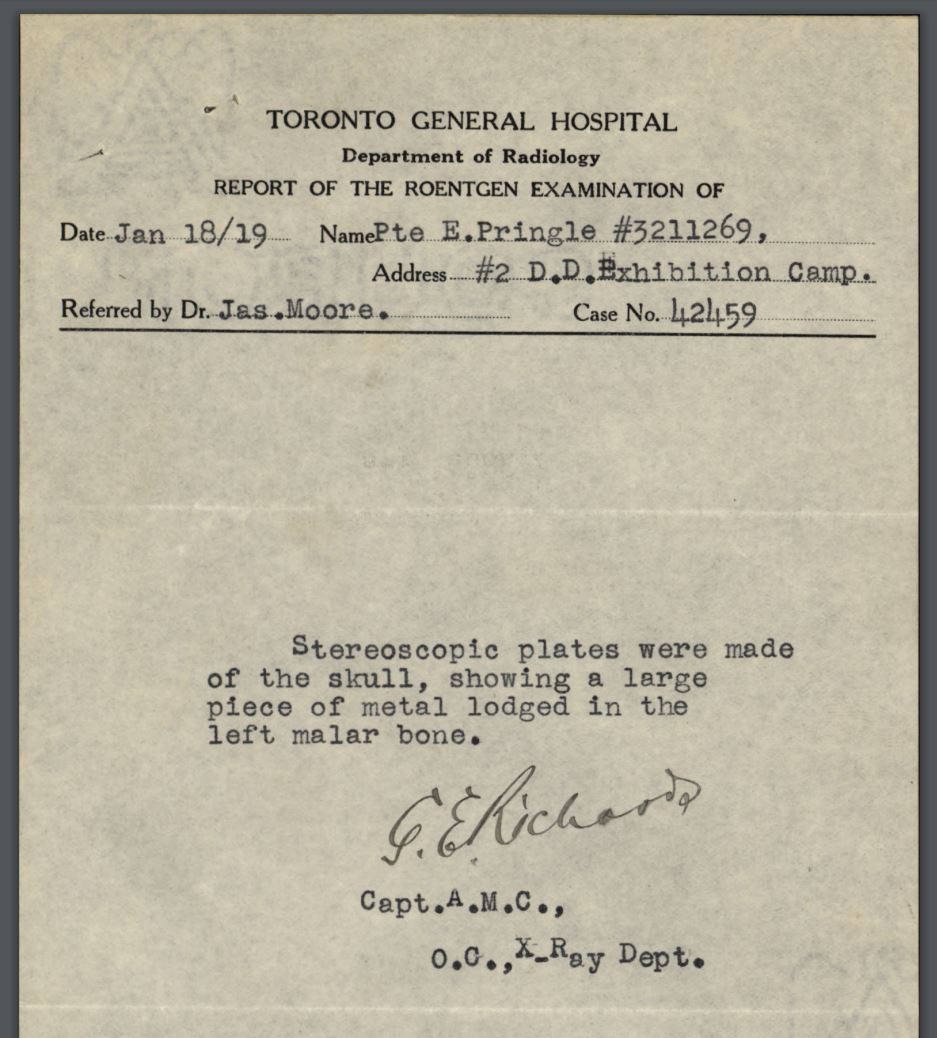
Elmer joined the 70th Battery of the Canadian Field Artillery with the regimental number 341269. He was five feet six and a quarter inches tall, with a fresh complexion, blue eyes and brown hair. His service record shows that he arrived in England on December 7th, 1917 on the troopship Megantic. He joined the 4th Brigade of the Canadian Field Artillery in France in April 1918. On September 2nd he received a gunshot wound to the left cheek below his eye, which took out part of his left molar jaw bone. He was sent to England to recover and returned to Canada in December 1918. In January 1919 he was discharged as medically unfit in Toronto. An x-ray taken on January 18th showed that there was still a piece of shrapnel in his jaw:

Elmer married Mae Kidd in Toronto on September 11, 1926. A note on his service file states that he died on January 13th, 1955.

Wilfred Lee Badgley signature

Wilfred Lee Badgley, a tinsmith, signed up in Toronto on this day in 1917. He was born in Deseronto on July 12th, 1898, the son of Edward Badgley and Eva (née Joyce). By 1905, when Wilfred’s sister Hilda was born, the family had moved to Oshawa. They were living in Drew Street, Oshawa, when Wilfred enlisted.

Badgley joined the 71st Battery of the Canadian Field Artillery with the regimental number 342159. He was five feet six inches tall, with a fair complexion, blue eyes and fair hair. His service record shows that he arrived in England on December 17th, 1917 on the SS Megantic. spent three weeks in hospital in Aldershot, England suffering from mumps in March 1918. He went to France in April 1918 and was posted to the 13th Brigade of the Canadian Field Artillery in October 1918. In December he was admitted to hospital suffering from a fever and he spent a further three weeks in Stourbridge Military Hospital in December 1918 and January 1919 with myalgia.

Wilfred Lee Badgley arrived in Halifax on March 22nd 1919 on the SS Cretic. He was demobilized in Toronto on March 26th, 1919. He married Marguerite Edith Hallett on April 15th, 1920 in Oshawa. Badgley died in Gravenhurst on October 15th, 1939 and was buried in Oshawa Union Cemetery.

Learning to fly was a dangerous business in 1917 and 1918. More than 14,000 of the men who joined the Royal Flying Corps lost their lives and 8,000 of them died while they were in training. The Royal Flying Corps (which became the Royal Air Force on April 1st, 1918) ran two pilot training camps close to Deseronto: Camp Mohawk on the Tyendinaga Mohawk Territory and Camp Rathbun to the north of Deseronto, either side of the Boundary Road. The camps opened in the Spring of 1917, with three training squadrons based at Camp Mohawk and two at Camp Rathbun. In the winter of 1917-1918 the Deseronto wing was transferred  to Camp Taliaferro in Texas to continue training in the warmer conditions there.

Fifty-five men associated with these camps lost their lives, bringing the First World War very close to home for people in Deseronto. Local doctors were called upon to register the deaths. The picture below is believed to show Deseronto doctor Elgin D. Vandervoort (1853-1939) at the site of one of the crashes.

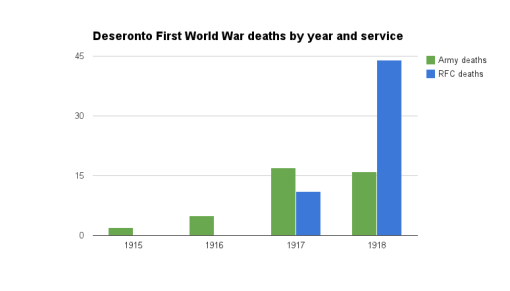
Of the 55 deaths, 40 were caused by flying accidents, 10 by the 1918 influenza epidemic, three from other diseases and two by other accidents. We will be marking the 100th anniversaries of these deaths as part of our First World War commemorative project over the next two years.

The chart below shows a comparison between the number of deaths over the course of the war of the Deseronto and Tyendinaga men who joined the army (in green) and those men who died while attached to the Deseronto training squadrons of the Royal Flying Corps (in blue).

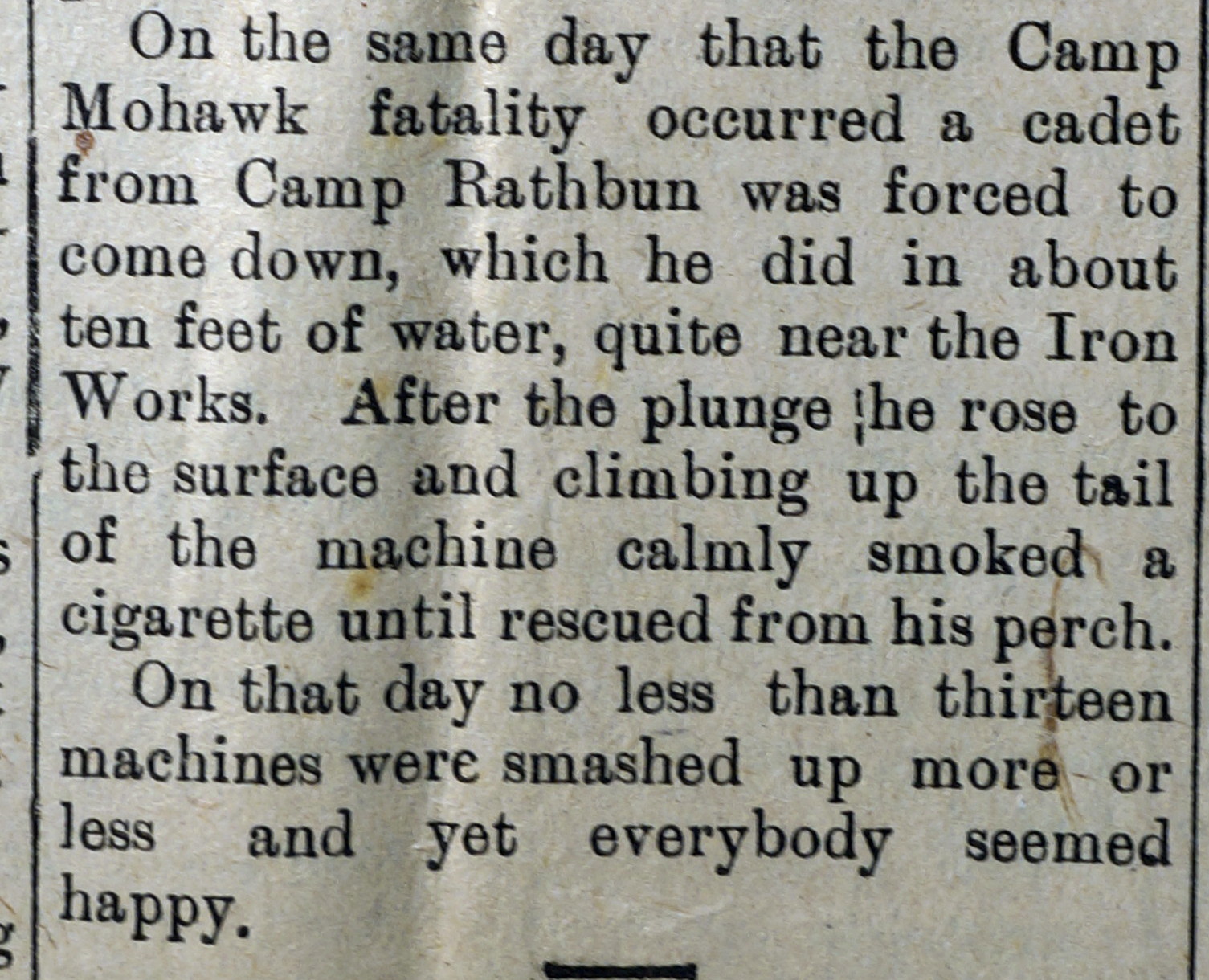
Royal Flying Corps and army deathsNot all the crashes were fatal, despite the flimsy nature of the aircraft of the time. A report from the Deseronto Post  on September 20th, 1917 describes one such event on September 13th:

1917 Sep 20 Deseronto Post report of water landing

On the same day that the Camp Mohawk fatality [the deaths of Cadets Domville and Kramer] occurred a cadet from Camp Rathbun was forced to come down, which he did in about ten feet of water, quite near the Iron Works. After the plunge he rose to the surface and climbing up the tail of the machine calmly smoked a cigarette until rescued from his perch.
On that day no less than thirteen machines were smashed up more or less and yet everybody seemed happy.

Phillip Maracle signature

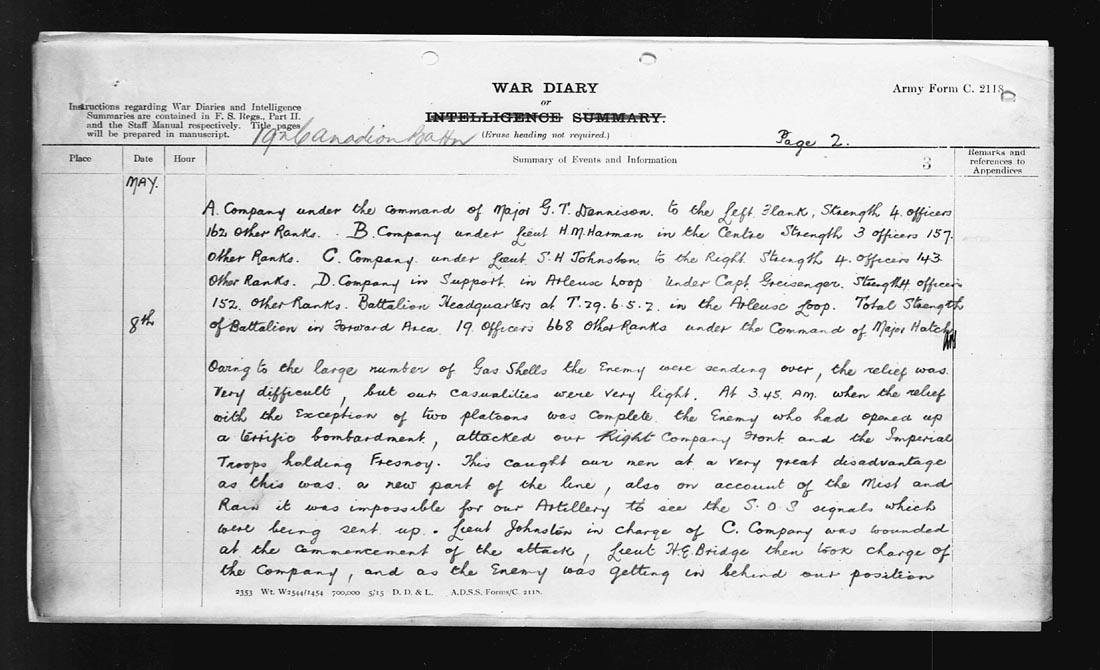
On this day in 1917, Philip Maracle was reported wounded and missing and was later assumed to have died in the trenches west of La Coulotte (southwest of Lens), France. The war diary kept by the 44th Battalion for May 10th describes the situation he faced.

44th Battalion war diary entry for May 10th 1917, courtesy Library and Archives Canada

44th Battalion war diary entry for May 10th 1917, courtesy Library and Archives Canada

LA COULOTTE 10/5 Enemy shelled front and support areas during day and made extensive use of rifle grenades and gas shells. In spite of this our advanced posts and captured trenches known as the TRIANGLE were retained. Casualties 4 O.R. [Other Ranks] Killed. 44 O.R. Wounded

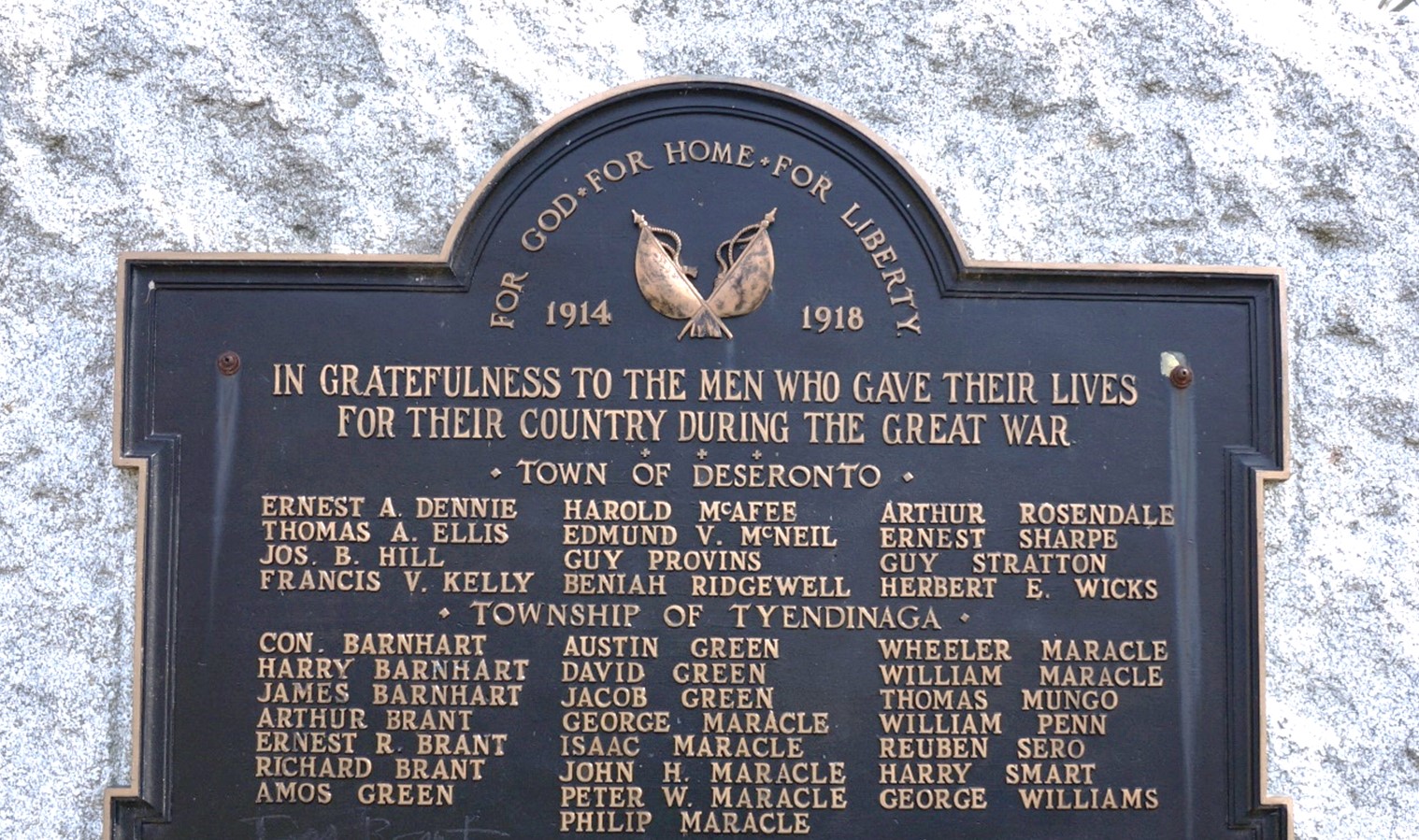
Maracle’s body was never found. He is commemorated on the memorial at Vimy and in Deseronto.

Deseronto memorial

Edmund Vincent McNeill signature

On this day in 1917, Edmund Vincent McNeill was killed in action in the trenches west of Fresnoy in France. German forces retook the village of Fresnoy on May 8th during the Battle of Arras. The war diary of the 19th Battalion describes the attack and the unit’s withdrawal (page 1, page 2, page 3). On the day following the attack, the men of the four companies of the 19th Battalion were re-formed into two companies.

McNeill’s body was never found. He is commemorated on the Vimy memorial and in Deseronto.

Deseronto memorial

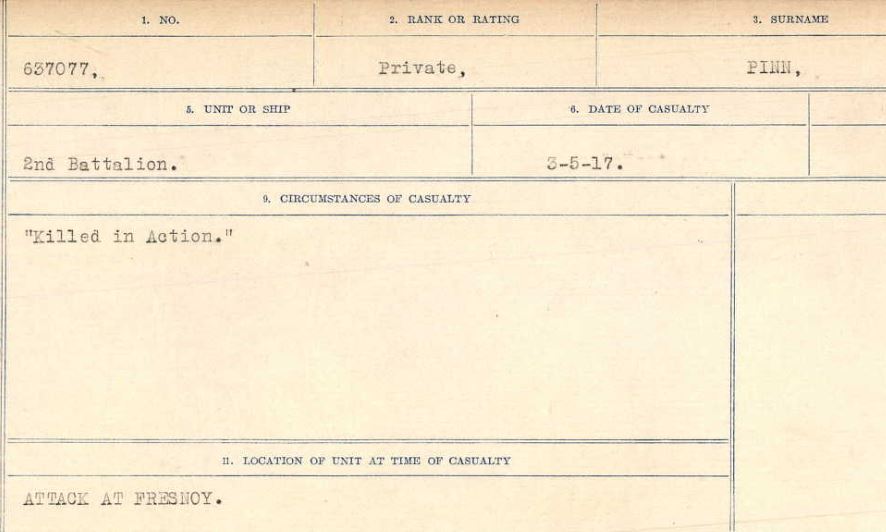
William Pinn signatureWilliam Pinn was killed in the same attack on Fresnoy as Richard Brant.

William Pinn circumstances of casualty

War Graves Registers: Circumstances of Death, courtesy of Library and Archives Canada

As was the case with Richard Brant, William’s body was not recovered after the attack. He is commemorated at Vimy and on Deseronto’s war memorial (as William Penn).

Deseronto memorial

Richard Brant signature

Richard Brant was killed on this day in 1917 at the Third Battle of the Scarpe in France. The extract below from the 2nd Battalion’s war diary shows the orders issued to the Battalion on May 1st, planning the attack on the village of Fresnoy in which Brant died.

2nd Battalion plan of attack at Fresnoy

Extract from war diary of the 2nd Battalion: plan of attack at Fresnoy, courtesy of Library and Archives Canada

Brant’s body was not recovered after the attack. He is commemorated at Vimy and on Deseronto’s war memorial.

Deseronto memorial

Keith Sharpe signature

Keith Sharpe enlisted in Toronto on this day in 1917. He was born in Deseronto on September 12th, 1899, the son of Philip Sharpe and Sarah (née Smith). When he joined up (claiming to have been born in 1898), he was living with his parents at 334 Adelaide Street, Toronto. His four elder brothers, Ernest, Alfred Nelson and Harry and James Wilmont had already enlisted.

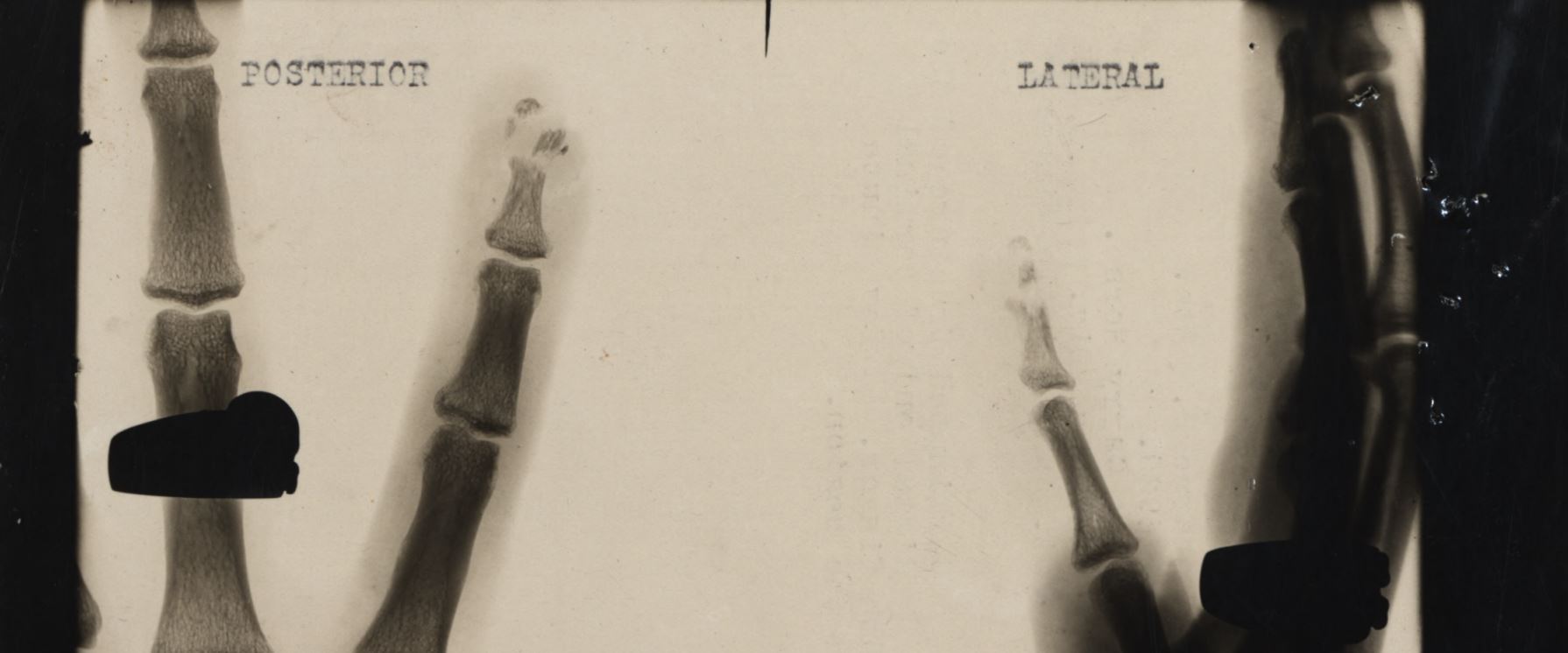
Keith joined the Canadian Mounted Rifle’s Depot Regiment with the regimental number 226925. He was described as five feet four inches tall, with a medium complexion, grey eyes and fair hair. His service record shows that he left Canada on the SS Scandinavian on October 22nd, 1917. He joined the Fort Garry Horse on April 11th, 1918 in France. In February 1919 he was injured when the little finger of his left hand was crushed in a pair of clippers. An x-ray on his file shows the damaged bone at the end of the finger.

X-ray of Keith Sharpe's finger

Sharpe left Liverpool on the troopship Caronia on August 9th and was demobilized on August 19th, 1919 in Toronto. He married Maude Mary Shaw (née Evans), a widow, in Napanee on March 4th, 1921. Keith died in April 1978 and was buried in the Deseronto cemetery, in plot 137A.

Daniel Webster Kingsbury signature

On this day in 1917 Daniel Webster Kingsbury signed up in Toronto. On his attestation paper he stated that he was born in Campbellford on May 23rd, 1898. In 1901 his parents gave his year of birth as 1899; they were living in the village of Hastings in Northumberland County at that time. His parents were Daniel Kingsbury and Mary (née Logan). When he enlisted, Daniel was living in Deseronto.

Webster joined the Canadian Mounted Rifles with the regimental number 226924. He was five feet nine and three quarter inches tall, with a medium complexion, blue grey eyes and light brown hair. His service record shows that he was discharged as being medically unfit due to tuberculosis  and being under age on November 30th, 1917. The report of a medical board at Camp Borden in August 2917 noted that he was five feet eleven and a half inches tall and weighed 107 pounds: “poorly nourished”.

Daniel married Christina King Dale, a nurse, on August 23rd, 1920 in Brighton, Ontario.

« Previous PageNext Page »